
COMMERCIAL CATERING
Commercial catering equipment, ready for high-turnover service.
Buffet, gastronorm, preparation and service equipment for kitchens and caterers that need dependable daily performance.
POPULAR STARTING POINTS
Choose the commercial catering task
Begin with the service or preparation job you need to support, then move directly to the relevant equipment range.
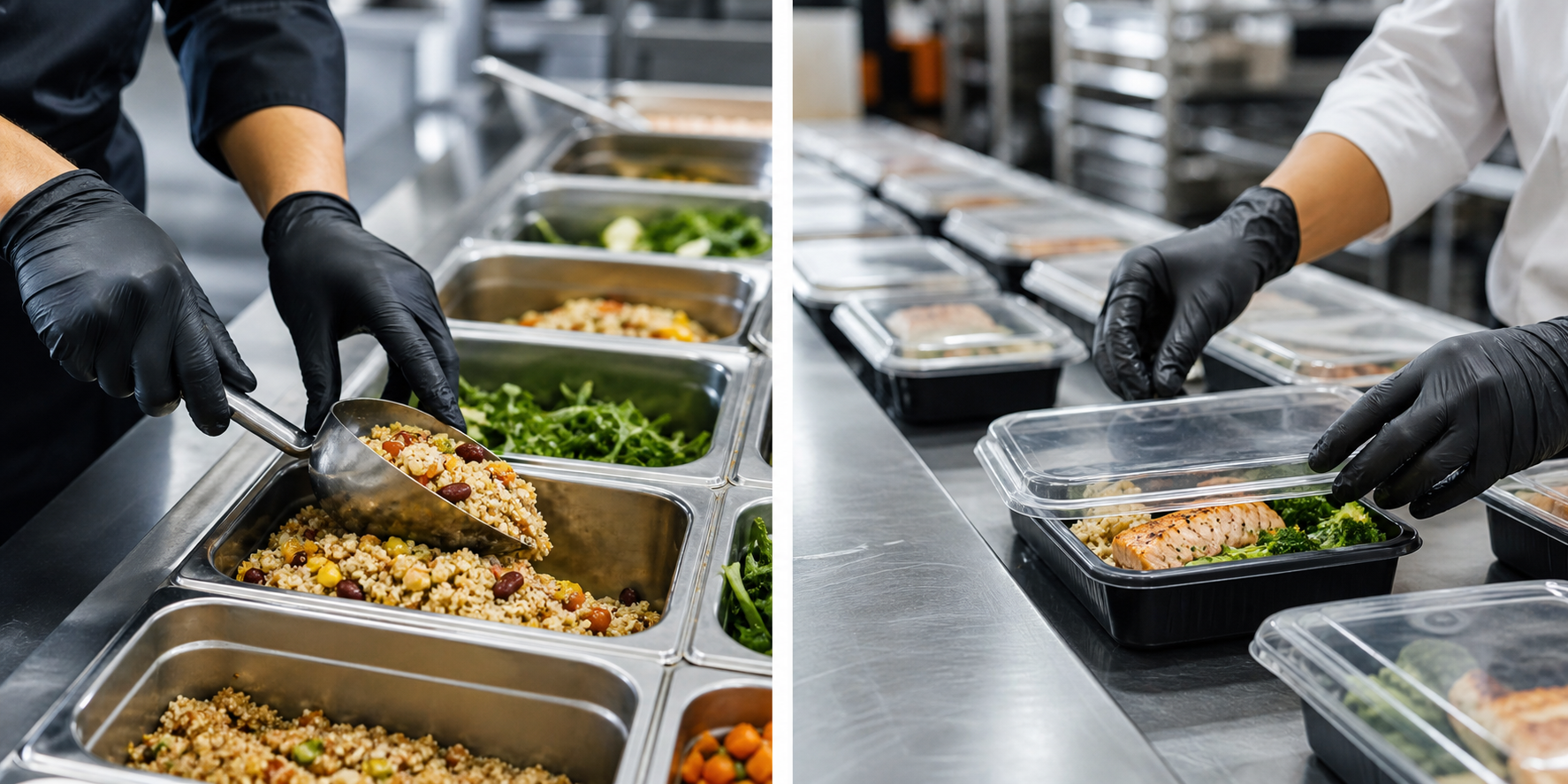
Service and buffet
Equip buffet, plated-service and event stations with products suited to high-turnover use.
Preparation and kitchen control
Choose practical smallwares and colour-control tools for prep areas and busy kitchen teams.
High-turnover re-ordering
Share the service volume, current item or product reference. We will help you build a practical re-order list.
Related industry solutions
Compare the related Mitrend industry pages for your supply route.
Catering food suppliers
Portioning scoops, sampling cups, food tubs and lids, prep and buffet supplies for food businesses.
Restaurant food suppliers
Portioning, packaging and prep supplies for restaurants, kitchens and food businesses.
Equip every service point with purpose
Clear equipment standards help kitchen and service teams work faster without introducing unnecessary variations.
Plan service flow
Choose buffet and gastronorm pieces for the actual service style.
Commercial catering checklist
Use this quick check before you request pricing or place a repeat order.
Confirm the operating need
- Service style and expected volume
- Required prep and service equipment
- Space, heating or handling requirements
Send the useful detail
- Current equipment or reference photo
- Required delivery date
- Kitchen or event delivery details
Hotel suppliers
Anti-theft hangers, buffet and gastronorm service, food-safety prep and packaging for hotels and lodges.
Relevant buying guidance
Useful articles are selected automatically from the Mitrend resource library for this industry.
-
Managing Lead Times and Safety Stock
Stockouts disrupt operations and overstocking ties up cash and space, and both often stem from misjudging lead times.…
-
A Cutting Board Colour Coding Chart for Staff Training
A colour-coded board system only works if every staff member knows it instantly. A clear colour coding chart,…
-
Gastronorm Lids: Types and When to Use Them
Gastronorm lids do more than cover a pan: they control temperature, hygiene and spillage across storage, transport and…
How catering buyers specify equipment
Commercial kitchens standardise on the gastronorm system so pans, lids and inserts interchange across equipment. Getting the GN fractions right up front avoids mismatched stock later.
Standardise on GN sizing
A GN 1/1 pan is 530 x 325mm and every other size is a fraction of that footprint, so a GN-standard pan or lid fits any GN-standard chafing dish, bain-marie or trolley. Count your wells, decide the fractions per service, and order pans and lids as matched sets.
Back-of-house hygiene and QC
Colour-coded boards and calibrated kitchen smalls keep HACCP paperwork defensible. The food-safety preparation system covers cross-contamination control from prep bench to pass.
Frequently asked questions
Do you deliver catering equipment nationwide?
Yes – stocked items ship via courier across South Africa, and lead times for bulk or supplier-order lines are confirmed in writing at quote stage.
Is your equipment GN-standard?
Pans, lids and buffet inserts follow gastronorm sizing, so they interchange with GN-standard chafing dishes, bain-maries and trolleys already in your kitchen.
How does bulk pricing work?
Add items to the quote basket with your quantities and we respond with carton pricing and confirmed lead times before you commit to the order.
Get wholesale pricing for your operation
Tell us how you serve, how much you handle and when you need delivery. We will help you choose a practical equipment route.